A Hallucinating Insomniac Reviews Civil War (2024)

Civil War: Alex Garland’s Most Challenging Film Yet

Reviewed by Brian P. Bechner for TheHumbleHeckler.com.

(Editor’s note: Film critic Brian P. Bechner is a lifelong insomniac who often experiences hallucinations while reviewing films. Keep this in mind when reading the following article.)

Reimagining history is a dicey undertaking. Every artistic interpretation of a real-life event or use of artistic license is fraught with potential for misunderstanding. Reimagining the American Civil War as a futuristic dystopian nightmare is even riskier. But if anyone can pull it off it’s Alex Garland, a man whose filmography oscillates between hits and misses, but is never lacking in courage. The hits include virtuosic sci-fi think pieces like Ex Machina (2014), Annihilation (2018), and Men (2022). And, unfortunately, the misses include comedic headscratchers such as Fart Academy (2016) and the regrettably titled sequel Fart Academy Number Two: Return of the Stank Monster (2019).

Nick Offerman as President Lincoln

With Civil War, Garland wisely leaves comedy behind in favor of a searing drama that recasts the actual Civil War as a future hellscape as witnessed by a group of intrepid journalists, each of whom represents a real-world historical counterpart. For example, Kirsten Dunst is almost unrecognizable as Lee Smith, the film’s fictional version of Confederate General Robert E. Lee. We are also introduced to Stephen McKinley as Edwin Stanton (Lincoln’s real-life secretary of war), and most notably, Nick Offerman as President Lincoln.

Kirsten Dunst as General Lee

This brand of thinly veiled fiction as antiwar allegory makes for a strange viewing experience, equally brilliant and frustrating. But I guess that’s only fitting for a film that clearly revels in stark contrasts. And I mean stark. An intense, beautifully choreographed battle sequence is immediately followed by 20 minutes of uninterrupted knitting. An intellectually stimulating conversation about the nature of war is literally interrupted by a belching contest. Drunken slap fights, beer pong, and competitive strip Yahtzee battles are intercut with scenes pondering the futility of violence, the finality of death, and the gravity of political instability. This thing is either a total mess or an unqualified masterpiece.     

Granted, I hadn’t slept in almost three days when I saw the film, and I was running on whatever energy I could cull from caffeine pills, black coffee, and countless OTC stimulants, but large swaths of this movie just don’t make sense. For example: Why is there a dance sequence featuring the Muppets? Who thought it was a good idea to cast Mike Tyson as Ulysses S. Grant? And why is the film’s score performed by a 75-piece orchestra of kazoos and slide whistles?

So … if you came here looking for answers, I have none to offer. But I will say that I haven’t stopped thinking about Civil War since the moment the screen went dark. That must mean something. Despite its narrative flaws and gaping holes in logic, I give Civil War five thumbs up … or ten cups of coffee … or something like that. I’m too tired to care anymore.

(Civil War is rated R for graphic depictions of war, puppet nudity, repeated use of the word poopie, hamster-on-hamster violence, disturbing facial hair, and adult situations.)                       

The First Omen: Easily The Most Important Film Ever Made!

Reviewed by Sally Darnell for TheHumbleHeckler.com

The best Omen film since … the last one!

(Editor’s note: Film critic Sally Darnell has a well-earned reputation for posting insincere, often flat-out sarcastic reviews. Keep this in mind when reading the following article.)

Well … here we are again. Another Omen movie. Aren’t we Lucky? And this time, we get to go all the way back to the genesis of this indispensable film series with The First Omen, a prequel absolutely every film/horror fan has been begging Hollywood to give us for decades. And boy does it ever deliver.

But let’s start at the beginning. The First Omen is clearly a passion project. I mean, there’s no way that some big-money producers and studio executives are merely trying to cash in on an established brand. Sure, this ultra-cynical tactic may have proven profitable for well-known IPs like Halloween, Scream, The Texas Chainsaw Massacre, Hellraiser, Cabin Fever, Joy Ride, Evil Dead, The Exorcist, Child’s Play, The Hills Have Eyes, Candyman, Saw, Ghostbusters and countless others I just don’t have the time or strength to mention here. But that doesn’t mean the people responsible for The First Omen are joyless corporate vampires out to such your bank account dry. Not at all.

Okay, sure … maybe the film spends a little too much time referencing the original Omen, but it does it the right way. It’s not like virtually every other reboot or prequel or requel or whatever the hell. This film’s version of nearly constant nostalgia-baiting is done so much more tastefully than any other franchise film ever made. Ever. No kidding. The First Omen’s reliance on unoriginal material is so artfully executed it actually becomes its own art form. That’s right, this film has innovated a brand-new form of creative expression, something I like to call “nostalgart”: You might not see anything new, but you’ll never see something so old and tired wrapped in a glossier package.

But what about the film itself? Is it any good? Of course it is. It’s an Omen movie—how could it not be great? The story is, thankfully, similar to all the others in the franchise. There are evil people skulking around in the fog. And there are innocent people frolicking in the sunlight. The evil people are actively conspiring to bring about the birth of the Antichrist, while the innocent people remain completely oblivious to repeated attempts by the evil people to impregnate them with the demon seed. And you’ll never guess what happens. Nope. Never. Not in a million years will you be able to see the twists and turns coming. This rollercoaster has no safety harness, so be warned before you buy a ticket and take the ride.

The surprises are unveiled so fast and so furiously that I had to remind myself to breathe. I’m serious. It’s a wonder nobody in the theater died. It was all just so … intense. The woman seated next to me terror-farted with so much force she passed out and had to be removed by the local ambulance corp. A young man seated a few rows ahead of me was so terrified he tore giant clumps of his hair from his own scalp and then methodically ate it, cackling like a lunatic during the full moon.

But the film isn’t just scary, it’s also beautiful. I’m not ashamed to admit that I wept … repeatedly. This was, without question, the most profound movie going experience of my life. It was downright surreal. I heard a choir of angels singing. A bald eagle circled majestically over my head. A panda gave birth in the balcony. A philanderer confessed his sins and begged his wife for forgiveness. The snack bar lowered the price of popcorn and soda. And the movie had a few decent gore scenes and body horror gags.

It was miraculous!

I give The First Omen a perfect 10 out of a possible 10. Go see it and be forever changed.

(The First Omen is rated R for blasphemy, unnecessary Bible quotes, graphic depiction of birth, pervasive strong language, the inclusion of a gratuitous tickle-fight sequence, adult situations, and smoking.)

Five Things You Couldn’t Possibly Know About The Texas Chainsaw Massacre (1974)

Reviewed by Henry Bernice for TheHumbleHeckler.com

(Editor’s note: Film critic/historian Henry Bernice has been struck by lightning seven times. Keep this in mind when reading the following article.)

Later this year, Tobe Hooper’s game-changing, genre-redefining, slasher/exploitation classic The Texas Chainsaw Massacre will celebrate its golden anniversary. That’s right, it’s been fifty years since Leatherface first unleashed 83 minutes of hell on unsuspecting audiences. Strangely, the movie’s great innovation lies in its total lack of innovation. TCM revels in a stripped-down aesthetic so threadbare the film print itself looks like it’s been through a barfight, a hangover, and an argument with the little missus, before trudging off to the theater to be projected. Just watching it, you can smell the BO, the putrefied flesh, and the bad breath. Heck, this may be the first film ever to give principal roles to sweat stains. And yet, it’s precisely that brand of backwoodsy realism that has created legions of ravenous fans whose passion for (and knowledge of) all things TCM is almost as psychotic as Leatherface himself. So, in honor of the film turning the big five-o and the fans who keep the TCM flame burning, here are five things you couldn’t possibly know about The Texas Chainsaw Massacre.

(1)  The film was originally titled The Wisconsin Pointy Stick Massacre. It’s hard to believe now, but director Tobe Hooper and his production team actually set out to make a movie about a stick-wielding lunatic who stalked and slaughtered a collection of lost motorists. They even filmed for six weeks in Wisconsin before realizing the film wasn’t working. “In our defense, that stick was really pointy,” Hooper said in a 1976 interview with Scuzzy Films Magazine. “I mean, it wasn’t sharp enough to kill someone, but you could definitely leave a banger of a scratch.” Ultimately, Hooper and company shut down the production and returned to Austin to lick their wounds. It wasn’t until a few weeks later, during a chainsaw juggling lesson, that Hooper would find the inspiration to move forward with the project.

(2) The film poster’s now-iconic tag line “Who will survive and what will be left of them?” was actually a last-second replacement. The film’s producers had been struggling to find the perfect tag for months. Co-writer Kim Henkel wanted the tag to be: “If you don’t drop a deuce in your pants, we’ll refund the price of your ticket.” Meanwhile, Hooper wanted to the tag to read: “Terror so real you’ll question your marriage … and probably drop a deuce in your pants.” Eventually, friends and colleagues convinced Henkel and Hooper that referencing defecation in the tag didn’t make any sense, and they reluctantly settled for the tag we all know and love.

(3) William Shatner secretly auditioned for the role of Sally Hardesty. “Yeah, that was really something,” Hooper said on an interview show called Wake Up, Dallas, while promoting Poltergeist in 1982. “[Shatner] showed up in drag, talking in a high, lilting feminine voice. He didn’t fool anybody. We all knew who he was. Hell, he didn’t even bother to shave. But, since he’d gone to all the effort, we decided to let him read. And he damn-near won the role. No kidding. Bill knocked it outta the park. In fact, we saw hundreds of women for that role, and it all came down to him and Marilyn Burns. Of course, in the end, we had to choose Marilyn. But it was a much closer call than you’d expect.”

Over the years, Shatner’s audition exploits have become the stuff of legend in Hollywood power circles. Fun fact: Screenwriter Larry Gelbart credits Shatner’s antics as the inspiration for his screenplay Tootsie, for which he would receive an Academy Award nomination.

(4) The films legendarily difficult shooting conditions have been exaggerated. Over the decades since the film wrapped, fans have been inundated with tales of heat stroke, unbearable odors, and twenty-hour workdays. But Hooper tells a different story. “The PR department drummed up those crazy stories as a way to market the film,” said Hooper in a 1991 interview with Canadian Root Beer Enthusiast. “No one wants to hear that a horror movie shoot went smoothly. People want to hear about curses and poor working conditions and crap like that. In reality, every actor had their own staff of personal servants. They even had private chefs. Marilyn’s contract even specified that she be transported to and from the set by rickshaw. As for the heat, every single shot of that film was created on a soundstage. If anything, we had to turn down the AC, because some of our precious artists were getting the shivers. You wouldn’t believe how spoiled the cast actually was. Once I saw Gunnar being carried to his trailer on the back of a Sherpa. Talk about lazy. And don’t get me started on John Dugan. That prima donna hired fashion models to coat the ground he walked on in a layer of rose petals.” When asked how he dealt with the pressure of dealing with such an entitled cast, Hooper said, “Whenever it all got to be too much, I’d take a break and go hit a bucket of balls with my instructor on my private driving range.”

(5) The TV version of the film was insane. Believe it or not, the unexpected popularity of TCM was too enticing for network executives to ignore. NBC gave Hooper an additional $3 million to shoot new footage to replace the scenes that were too graphic for TV and to pad the runtime enough to allow the film to fill two hours of network airtime. As a joke, Hooper reimagined the film as a screwball family comedy about the domestic misadventures of newlyweds Sally Hardesty and Leatherface. To everyone’s surprise, the network loved it. In fact, Hooper was hired to oversee the adaptation of the TV version of TCM into a traditional sitcom—and, unbelievably, he did. The pilot episode of That’s My Leatherface! aired on September 13, 1979. Unfortunately, CBS unveiled its latest sitcom, Benson, in the same time slot, leaving That’s My Leatherface! largely ignored by the public. The series was cancelled after six episodes and a series of scathing reviews by confused TV critics.         

So there you have it, lovers of the chainsaw. Happy 50th! And here’s to 50 more years of drippy, sweaty, disgusting fun.

Godzilla x Kong (?): More Like Trojan Horse vs. Unsuspecting Public

Reviewed by Anonymous for TheHumbleHeckler.com.

(Editor’s note: The film critic known as Anonymous suffers from an excessive persecution complex and is prone to fits of extreme paranoia. Please keep this in mind when reading the following review. His or her opinions do not necessarily reflect those of TheHumbleHeckler.com.)

Some fools may see Godzilla x Kong: The New Empire as another leisurely stroll through the Matrix that governs us all. Some have even referred to it as “harmless entertainment.” But those of those whose eyes are wide open know better than that. In reality, this film is a thinly veiled metaphor for the coming New World Order. Don’t believe me? Just look at the facts. For starters, the subtitle of this film is The New Empire. Coincidence? Only if you make a habit of buying whatever Big Brother sells you without question. And then there’s the story. Check this out: Godzilla (or Asia) and Kong (or North America) join forces to fight off a serious threat to someplace called Hollow Earth (or the truth). And the whole thing plays out in one violent fight sequence after another, not-so-subtly suggesting that all-out war is inevitable. And who profits from war? You know damn well who. The Man—that’s who. The Godzilla character suggests that the war will be atomic in nature. While Kong clearly represents the use of guerrilla (a lazy play on words, I know) tactics to infiltrate and detonate WMD’s in our cities and towns, right under our noses. The film also implies that Kong may be patient zero (Typhoid Hairy, if you will) in an impending worldwide outbreak of the monkeypox virus.

Original Theatrical Movie Poster

Director Adam Wingard (if that is his real name) is at his nefarious best, employing state-of-the-art effects work, colorful scenery, playful banter, and exciting action sequences to lay the groundwork for the coming cataclysm, an inevitable shift in the power structure and social order that will create a new society—something the film refers to as the MonsterVerse. Meanwhile, the popcorn-munching masses never suspect a thing. Wingard was certainly given every opportunity to pull off this masterpiece of subterfuge. Every possible financial and material resource was made available to him. After all, the film has a production budget of $135 million, but my sources tell me the actual budget was closer to $160 billion. So … where did all the money go? Because it certainly isn’t all on the screen. The answer is simple and terrifying: Nanobot technology.

Every single official Godzilla x Kong soda cup, popcorn bucket, and plastic toy has been coated with a microscopic layer of nanobots whose sole purpose is to infiltrate your bodies, either through ingestion or skin absorption, and burrow into your brains, crisscrossing your hardwiring until you can no longer think for yourself. The nanobots are also trained to give you super-cravings for Coke and theater popcorn, which is more than a little petty and unnecessary. But am I surprised? Not one bit. I mean, we are talking about Warner Bros. Pictures here, people.

Godzilla x Kong: The New Empire is, at best, an effective propaganda film, and, at worst, the beginning of the end of all life on Earth as we know it. But Dan Stevens is pretty cool and Rebecca Hall is always worth the price of admission, so what the hell. If you don’t have a problem with becoming a useless, drooling, subservient automaton give Godzilla x Kong a shot. At least you’ll get to see a lizard and a monkey break stuff.

I give Godzilla x Kong: The New Empire five tinfoil hats out of a possible five.

(Godzilla x Kong: The New Empire is rated PG-13 for pervasive use of subliminal imagery, extensive growling, monkey nudity, uncomfortable dialogue, and adult situations.)              

Five Things You Couldn’t Possibly Know About Friday the 13th (1980)

Written by Henry Bernice for TheHumbleHeckler.com.

(Editor’s note: Film critic/historian Henry Bernice has been struck by lightning seven times. Keep this in mind when reading the following article.)

Friday the 13th is one of the more polarizing horror films of the ’80s. Legions of horror fans see something in the film that legions of film critics simply do not. But, love it or hate it, the film has made an indelible impact on the industry, one that continues to this day. More than four decades after that first fateful trip to Camp Crystal Lake, generations of Friday fans continue to spend their hard-earned dollars and their precious time pouring over the minutia of the film’s most trivial tidbits, wearing their knowledge of the film(s) on their sleeves like a merit badge from Camp No-Be-Bo-Sco. And yet I have come up with five juicy little factoids that even the most ardent Friday fan couldn’t possibly know. So … here we go.

(1) Most Friday enthusiasts know that the film was originally titled A Long Night at Camp Blood. But only a privileged few have heard the actual working title: Friday July 13th, Around Seven O’clock P.M. Can you imagine such an awful title being seriously considered? But that’s nothing compared to the title proposed by Paramount Pictures bigshot producer Colin Bretherton, who wanted the film called: Camp Necky Stabby in honor of the film’s most notorious murder (you know, the scene where Kevin Bacon gets it right through the neck). Other prominent title suggestions include: The Horny Teen Massacre, Kind of Halloween, but not really, and Friday in New Jersey.

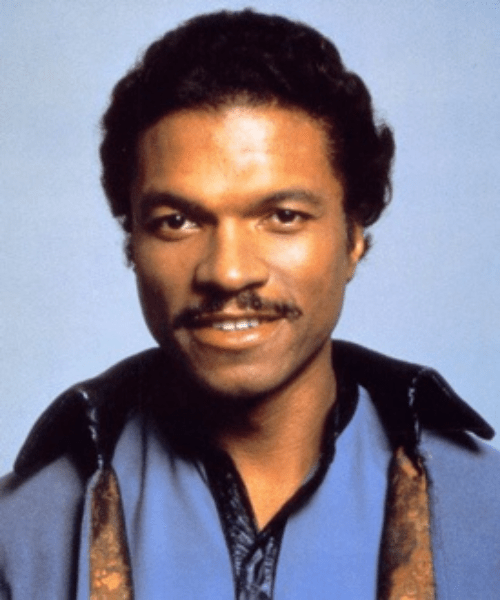
Actor Billy Dee Williams had no affiliation with the film.

(2) The film had to be completed on a budget of $550,000. To cut costs, all of the cabins seen in the film were made completely out of fudge and Rice Krispie treats. “We thought it was a good idea,” said Sean S. Cunningham (the film’s producer/director) in a 1982 interview with Film Monsters Magazine. “But, boy, were we ever wrong. Those cabins attracted every hungry animal withing ten miles of the set. By the second week, we were up to our cornholes in rat bites and bear attacks.”

(3) Mrs. Voorhees was not supposed to be the killer. Believe it or not, the original script called for Crazy Ralph (“You’re all doomed!”) played by Walt Gorney to be revealed as the Camp Crystal Lake killer in the film’s final moments. Unfortunately, Mr. Gorney fell ill and had to be hospitalized before the film was finished shooting his scenes. “It was the damnedest thing,” Cunningham told an interviewer for Haute Couture Magazine in 1981. “One day we came to the set and found him [Walt] eating his weight in fudge and Rice Krispie treats. I mean, that guy was chewing right through the walls of one of the cabins. It was crazy.” Years later at a horror convention, when asked about the lost opportunity to play one of horror cinema’s all-time great villains, Walt Gorney said, “Worth it.” Then he threw a half-finished Bahama Mama-flavored Slush Puppie at Betsy Palmer.

Queen Elizabeth II: The world’s most famous Friday fan.

(4) Queen Elizabeth is a big fan. That’s right, QE2 loves the Voorheeses and all of their gory misadventures. She was overheard talking about the Friday films at the snack bar while appearing for an official Audience with Pope Francis in 2015. “I can watch all of the Paramount Fridays, but that first one is hella scary,” she said. There is also an unconfirmed rumor stating that QE2 collects Jason masks. “Oh hell yeah, she loves her Jason masks. She even paints them and gives them customized machete gashes,” said Sarah, Duchess of York, in an off-the-record 2019 chat with journalist Chelsea Taunton from the magazine Modern Root Beer Enthusiast. “I think she’s even got a withered Pamela head tucked away in a closet at Balmoral.”

(5) Kevin Bacon was almost fired. It’s hard to believe now, but there was a time when Kevin Bacon was difficult to work with on set. Screenwriter Victor Miller recalled some of the not-so-fond memories of shooting with Bacon in an interview with Immoral Dentistry Magazine in 1990. “Kevin was in a strange place at that time. He wanted to do the role as a Polish transfer student, and no matter how much we pleaded with him, he refused to acquiesce. So he spoke with a Polish accent for the entire production.” The situation became so dire that Cunningham had to bring in an actor to dub all of Bacon’s lines. “We couldn’t afford a top-tier voice actor,” Miller said. “So we had to bring in an unknown named Arnold Schwarzenegger. And, like, shockingly, he totally nailed it. Too bad he went uncredited.”

So, there ya’ have it, Friday fans. Five more things you can use at parties to impress other … um … trivia enthusiasts, maybe? Yeah, let’s go with trivia enthusiasts. Bye!

It’s Me, Billy: Traditional Sequel or Postmodern Masterpiece?

Reviewed by Armen Steckler-Briggs for TheHumbleHeckler.com.

(Editor’s note: Film critic Armen Steckler-Briggs is unaware of the 1974 film Black Christmas. He has also recently been institutionalized for excessive glue sniffing. Keep this in mind when reading the following review.)

Well … here’s something new. Just when I thought I’d seen it all, here comes It’s Me, Billy, one of the strangest sequels (or films) I’ve ever seen–and maybe one of the most brilliant.

Written and directed by Bruce Dale and Dave McRae, It’s Me, Billy serves as both a fantastically realized slasher film and (get this) as a sequel to the 1979 family classic Black Beauty. I know what you’re thinking. Believe me, I felt the same way at first, but, as crazy as this premise sounds, it works … somehow.

In this iteration, Black Beauty (the equine hero from the original film) has gone all Travis Bickle after years of being forced into servitude as a racehorse. That’s right, this beauty is pissed and it’s time for someone to pay. Victoria Mero stars as the granddaughter of Alec Ramsey, the man who initially befriended Black Beauty before ultimately betraying their friendship and exploiting the majestic creature for financial gain.

Here’s the story: After learning that Alec Ramsey has passed away, Black Beauty devises a plan to do away with as many surviving Ramseys as possible. He begins by inviting Ramsey’s granddaughter (Mero, in a devastating, gritty performance) and two of her besties to Ramsey’s house for some good old-fashioned Christmas spirit. This is when the film takes a turn away from the spirited family friendly adventure of the original in favor of a dark examination of why good horses go bad. And believe me, this horsey has indeed gone bad. Now referring to himself as “Billy,” Black Beauty embarks on a murder spree, picking off his victims one at a time until his blood lust is satiated.

This is where It’s Me, Billy mutates into a postmodern masterpiece. The film forces the viewer to ask some pretty tough questions like: Is “Billy” a character Black Beauty plays in order to psychologically distance himself from the violence he is about to commit? Or is “Billy” a more permanent manifestation of Black Beauty’s fractured psyche? Has “Billy” completely taken over Black Beauty so completely that Black Beauty no longer exists at all? Or does “Black Beauty” now exist in the mind of a fully realized Billy? The answer really doesn’t matter because you get to see a horse kill people.

Honestly, after watching this film, I have to put Billy up there with the greatest screen killers of all time. After all, Norman Bates is scary, but he isn’t a freakin’ horse. I mean, imagine you’re in a big scary house at night, settling in, getting ready for bed … And then, out of the shadows comes a knife-wielding horse. Let’s be honest, the heart attack will get you long before the serial-killing horse.

Dale and McRae do a good job of keeping Billy/Beauty in the shadows, never allowing too much to be seen. We don’t hear any neighing or the clippity-clop of hooves hitting hardwood. That would be too obvious. (For the record, we also never see any big, steamy horse poopies, either. That would have been gratuitous and silly.) No, instead we are treated to a subtle, terrifying film that works as both an experiment in pure terror as well as a treatise on equine mental health issues.

I give It’s Me, Billy a perfect five stars out of a possible five.

(It’s Me, Billy is rated NC-17 for graphic violence, profanity, nightmare imagery, drug abuse, and one brief shot of horse schlong.)

Revisiting Halloween II (1981)

Reviewed by Marc Hopspring for TheHumbleHeckler.com

(Editor’s note: Film critic Marc Hopspring reviewed this film after watching it via a malfunctioning cable box that, unbeknownst to him, randomly switched back and forth between Halloween II and True Lies. Keep this in mind when reading the following review.)

It had been at least a decade since I’d seen Halloween II, and boy oh boy is it different from the film I remember. For starters, I had no recollection of James Cameron directing this film. And now that I know, I have to rank this as one of Cameron’s worst efforts. And that’s just the first of many surprises.

Arnold Schwarzenegger as Dr. Sam Loomis

Halloween II is by far one of the strangest sequels ever produced. I’m not really sure how this thing is even related to the first Halloween. Despite the uncountable number of temporal and logical gaps, I have to assume this hodgepodge of narrative spaghetti was created on purpose. After all, Halloween creator John Carpenter wrote the script, which is supposedly based on a French film or something.  Anyway, here’s the plot: After surviving being shot six times on Halloween night 1978, Michael Myers is now–somehow!–the leader of a terrorist organization called the Crimson Jihad, and it’s up to husband-and-wife team Laurie Strode (Jamie Lee Curtis) and Dr. Sam Loomis (now played by Arnold Schwarzenegger–that’s right, Ahhhh-nold) to stop Myers from sneaking a nuke into Haddonfield Memorial Hospital. This is where the film starts to lose me. I mean, why would any terrorist group want to take out a small town hospital, especially with a weapon that could destroy an entire city? Where’s the logic in that? And when the hell did Laurie Strode marry Dr. Loomis?

An almost-unrecognizable Jamie Lee Curtis as Laurie Strode

Even worse than the nonsensical storyline is the film’s schizophrenic editing style. In one scene an unmasked Myers (who is now Middle Eastern for some reason) engages in a brilliantly choreographed gun battle in a public restroom, and then in the next scene he’s drowning a naked nurse in a hot tub–and the mask is back. In another confusing sequence, Laurie does a sexy striptease for Loomis (again, he’s now her husband!), then out of nowhere, she’s posing as a hospital patient (in a bad wig) who is forced to fight off the advances of a horny ambulance driver, only to find herself, mere moments later, fighting off the advances of Bill Paxton. And then, for reason I will never EVER understand, Arnold disguises himself as Donald Pleasance and faces off with Myers in the film’s climax–a climax in which they are both blown up. Don’t get me wrong, it’s a fine ending, but by the time the film finally got to it I was just too confused to care anymore.

Tom Arnold as … I don’t know … maybe Sheriff Brackett?

When I say the film is confusing, I have never been more serious in my life. Once scene begins with an intricate chase in which Loomis, on horseback, pursues Myers, on a motorcycle, through a crowded shopping mall. Exciting, right? So then why does the scene end with a horny ambulance driver singing an X-rated version of “Amazing Grace”? The film just leaves me with too many questions. Why, for example, does Jamie Lee Curtis’s makeup keep aging and de-aging her? Is this supposed to be an example of spycraft? If so, is this really supposed to confuse Myers? And why the hell is Tom Arnold in a Halloween film? When the hell did Loomis learn to fly a Harrier jet? And for what possible reason did the Crimson Jihad feel it necessary to Kill Ben Tramer? It’s all so bizarre. And I haven’t even mentioned the ski slope shootout that culminates with a child in a pirate costume getting gashed by a razor blade hidden in an apple. Why are trained spies hunting trick-or-treaters? One minute we’re watching a bridge blow up and the next we’re watching an idiot knock himself stupid after slipping in a puddle of blood. Aw … forget it! To hell with this mess of a movie.

Halloween II is a flawed horror sequel for sure. If you’re in the mood for something that makes you question your sanity, this flick is for you. Otherwise, stay far, far, away from this celluloid turd. Although, to be fair, Halloween II makes more sense than the movie I watched right after it. In that stinker, a gremlin steals a DeLorean and time-travels back to 1955 to make sure nobody gets wet or eats after midnight. Talk about nonsense.

I give Halloween II one star out of a possible five stars and all the bile my liver can produce.

(Halloween II is rated R for profanity, violence, nudity, aggressive stupidity and the graphic depiction of Tom Arnold.)


Avengers: Endgame: Fine Entertainment for Humans … Like Me

Avengers: Endgame: Fine Entertainment for Humans … Like Me

Reviewed by Graktar the Terrible Max Human for HumbleHeckler.com.

(Editor’s note: The following review contains content the author attempted to redact by using his Word program’s strikethrough function.)

The new filmed entertainment Avengers: Endgame is a sequel to a film about a giant purple space monster who wipes out half of all life on Earth with a snap of his fingers—and yet it isn’t as funny as it sounds. In fact, many of the Earthlings seated in close proximity to me were actually excreting ocular fluid from their cranial orbs in spasmodic flailings of emotion. The estrogen sack (or female) reclining next me was even blubbering. Go figure. You’d never see Queck the Conqueror, Primary Overlord of Invasion my friend Dave acting like that in a public place. Strangely, I must confess that listening to the grinding sounds made by this woman’s obstructed sinuses in concert with the occasional bout of intestinal distress brought on by her overconsumption of nachos did soothe my dorsal mantle cavity nerves, which as you know, decelerates production in my venom glands is good. And that warm feeling always reminds me of my youth, playing in the Zircon fields on Kakadonia 12 baseball.

Anyhoo, this filmed entertainment stars the Second Robert Downey as a man who has engineered some sort of intelligent armor that gives him command over an arsenal of advanced weaponry as well as the power of flight, giving him a tactical advantage in almost any combat situation. He’s also dating a hottie. Large Blond Man plays Thor, some sort of God. From the context provided by the film, I assume he is the God of Hammers. There’s a man who turns into a green monster when he’s annoyed. There’s a black-leather-clad female assassin. And then there’s—oh, I don’t know, something like 60 other “heroes” or something. It’s almost impossible to keep track of all these characters. After all, my training focused mainly on World Conquering and Obliterating Inferior Life Forms math, not cinema. So cut me some slack, okay.

I suppose, as an overall entertainment experience, Avengers: Endgame isn’t terrible. It’s certainly better than having your tentacle pustules lanced by a smoldering plutonium-charged blade Alf. Although I have to admit that the three-hour runtime placed nearly unbearable stresses on at least three of my bladders, not the mention the damage I could’ve done to my acidic bile ejector. But then again, it’s probably my fault for buying the big Pepsi.

All in all, the film works as a fun, escapist thrill ride. The actors do a fine job of pretending. However, the so-called “action” scenes are laughably naïve. Don’t worry, I won’t spoil anything important, but let’s just say, if these heroes and this technology is the best Earth has to offer as resistance to a full-scale invasion … well, then, I suggest you go out and see this film before your world is reduced to towering piles smoldering ash and every Earthling’s physical vessel is rendered a quivering goo puddle. Also, the effects are neat.

All hail Queen Xlylonia! So go see it and have a ball.

(Avengers: Endgame is rated PG-13 for the incessant whining of fleshy humans, a few profane utterances, laughably simple scenarios of destruction, and adult situations.)

End communication. Thanks for reading.